
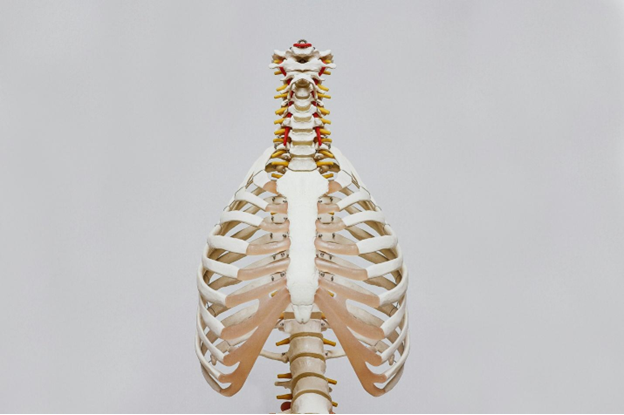
Spinal stenosis is when the space around the spine is narrowed. This can put pressure on the spinal cord and nerves that travel through the spine. Spinal stenosis happens most often in the lower back and the neck.
Some people with spinal stenosis have no symptoms. Others may experience pain, tingling, numbness and muscle weakness. Symptoms can get worse over time.
As part of your primary care evaluation at FourC Health, we assess progression and tailor management based on your function and quality of life.
Spine:
The bones in the spine are called vertebrae which stack up on top of one another creating a channel called spinal canal. Spinal cord and nerves pass through this canal.
Your spine supports the weight of your body and protects the spinal cord and the nerves. In between the vertebrae are the discs that cushion the bones. Muscles and ligaments help support and stabilize your spine and facet joints help with mobility of the spine.
Some common causes of Spinal stenosis:
- Osteoarthritis/Bone Spurs: This is age related deterioration of the space between the vertebrae. This causes bone surfaces to rub against each other resulting in bony growths called bone spurs which can narrow the spinal canal.
- Disc Degeneration/ Disc Herniation: Disc is the soft cushion in between the vertebrae. With age, these can flatten or bulge or leak material which can then press on the spinal cord and nerve roots.
- Thickened ligament: Ossification of the posterior longitudinal ligament happens when calcium deposits form on the ligament that runs up and down behind the spine and inside the spinal canal. These deposits make the fibrous tissue of the ligament hard and it may press on the nerves in the spinal canal.
- Tumors: These are abnormal growths of soft tissue that may affect the spinal canal directly by growing into the spinal canal and narrowing the space or causing inflammation. Some people develop a rare disorder called epidural lipomatosis, which happens when fat builds up on or around the lining of the spine.
- Spinal injuries: May cause misalignment of the spine and the spinal canal or cause fractures that produce fragments of bone that penetrate the canal.
- Inherited conditions: Some people are born with conditions that can cause spinal stenosis like congenital stenosis which is where you are born with a small and narrow spinal canal, Scoliosis which is curvature of the spine that can cause spinal stenosis, and achondroplasia which is impaired bone growth. There are few other inherited conditions as well.
Symptoms:
Symptoms of spinal stenosis vary based on whether it is in the lower back or neck, the two common places. The narrowing creates pressure on the spine and other surrounding structures, causing symptoms. For most people, symptoms develop and progress slowly over a period of time, and some people may not have any symptoms.
Symptoms of spinal stenosis in the lower back:
- Pain in the lower back.
- Burning pain or ache that radiates down the buttocks and into the legs, that typically worsens with standing or walking and gets better with leaning forward.
- Numbness, tingling, or cramping in the legs and feet. These may become more pronounced during standing or walking.
- Weakness in the legs and feet.
- People with severe stenosis can have bowel and bladder issues.
Symptoms of spinal stenosis in the neck may include:
- Neck pain.
- Numbness or tingling that radiates down the arms into the hands.
- Weakness in a hand, arm, or fingers.
- Radiating pain to the shoulder/shoulder blade
- People with severe stenosis can have balance issues.
Walking, standing, or extending the lower back can cause symptoms to worsen. Sitting or bending the lower back or neck may relieve symptoms. Bent position opens up the spinal column, enlarging the spaces between vertebrae at the back of the spine.
Work up:
- History and physical exam
- Imaging studies like Xray, MRI, CT scan or CT myelogram
- Bone scan to evaluate bone change, bone health and bone tumors
- EMG or electromyography to measure the electrical activity of the muscles and the nerves
Treatment options:
Nonsurgical Treatments
- Physical therapy likely water aerobics or swimming or exercise bike
Medications
- Anti–inflammatory medications to help relieve inflammation and pain.
- Over-the-counter pain relievers taken by mouth like Tylenol or applied to the skin.
- Prescription pain relievers for severe or acute pain.
- Epidural or steroid injections in the spine for pain that radiates due to nerve compression or irritation.
Surgical Treatments
If symptoms persist or worsen despite non-surgical care, a referral to a spine specialist may be necessary. Surgery is considered when:
- There is progressive weakness
- Severe pain interferes with daily function
- There is bowel/bladder involvement
Common surgeries include:
- Laminectomy– removing part of the vertebra
- Discectomy– removing part of the disc
- Spinal fusion- fusing bones together for stability
- Facetectomy- removal of facet joints to relieve pressure
At FourC Health, our primary care team will help identify, evaluate, and manage spinal stenosis with a patient-centered, stepwise approach. Most cases can be managed conservatively, but for severe cases, surgical referral may be needed. With proper care, many patients maintain good function and improved quality of life.