
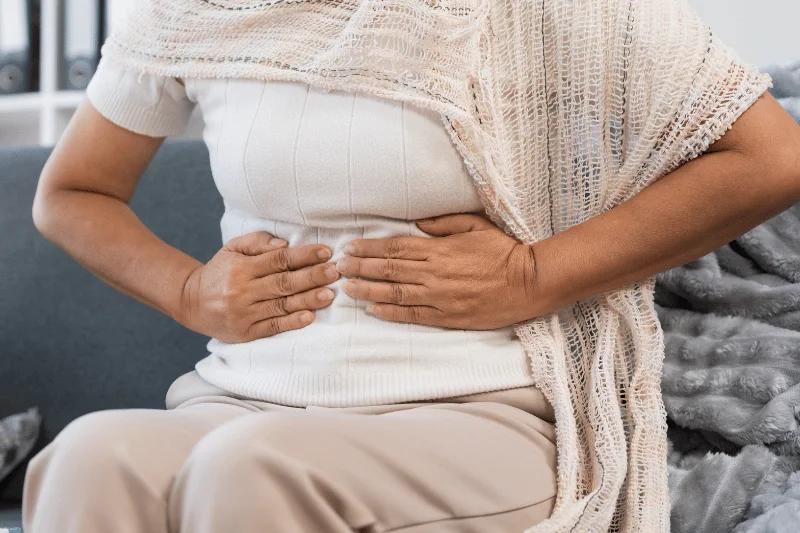
New upper abdominal pain, nausea, or recurrent right upper quadrant abdominal discomfort after meals should not automatically be dismissed as part of losing weight. These symptoms can have several causes, but they may signal a gallbladder problem, especially when pain is severe, keeps returning, or occurs with fever or yellowing of the skin or eyes.
Significant or rapid weight loss is associated with an increased risk of gallstones. However, not everyone who loses weight develops gallstones, and most people who have gallstones do not experience symptoms. Recognizing potential warning signs can help you know when to contact your doctor.
What Are the Signs of Gallbladder Problems During Weight Loss?
The gallbladder is a small organ by the liver that stores bile, a fluid used in digestion. Gallstones are hardened deposits that can form in this fluid. When a stone blocks the flow of bile, it can cause a painful episode commonly called a gallbladder attack.
Possible gallstone symptoms during weight loss include:
- Sudden pain in the upper right or upper middle abdomen
- Pain that becomes intense and lasts for minutes to several hours
- Nausea or vomiting
- Pain that spreads toward the back or right shoulder
- Episodes of discomfort after meals, particularly heavy meals
An episode can stop when a stone moves and the blockage clears, but improvement does not necessarily mean the underlying problem has gone away. More attacks may follow.
Nausea or digestive discomfort alone does not establish that gallstones are the cause. Persistent or recurring symptoms deserve evaluation because gallbladder problems can overlap with other GI side effects that may occur with medications used for weight loss.
Where Is Gallbladder Pain Usually Felt?
The typical gallbladder pain location is the upper right abdomen, just beneath the right rib cage. Some people instead feel pain in the upper middle abdomen, below the breastbone.
Pain may also spread to:
- The back, particularly between the shoulder blades
- The right shoulder or the area around the right shoulder blade
Pain patterns also vary. Do not wait for every “classic” symptom to appear before seeking care for severe or persistent abdominal pain.
How Is Gallbladder Pain Different From Normal Digestive Discomfort?
- It is not always possible to tell at home. Gallbladder symptoms can resemble reflux, ulcers, pancreatitis, and other abdominal conditions.
- A gallbladder attack often causes noticeable pain in the upper right or upper middle abdomen. Sudden, rapidly intensifying pain is more concerning than a vague sense of fullness after eating.
- Pain that lasts for hours or returns in similar episodes deserves medical attention, even if you feel better between episodes. A blockage can temporarily resolve and then recur.
- Gallbladder attacks often follow heavy meals. However, a meal-related pattern alone does not distinguish gallstones from other digestive problems.
- Fever, chills, jaundice, dark urine, or pale stools may indicate a blocked bile duct, inflammation, or infection.
- The practical takeaway is that persistent or recurring upper abdominal pain requires appropriate assessment.
Gallbladder pain after weight loss can also be difficult to distinguish from general digestive symptoms based on location alone. The timing, intensity, duration, and pattern of the pain can all help your doctor determine what may be causing it.
Can Rapid Weight Loss or GLP-1 Medications Affect Your Gallbladder?
Rapid weight loss is a recognized risk factor for gallstones. Gallstone formation is related to changes in bile and how effectively the gallbladder empties.
Gallbladder problems are also a recognized safety consideration with GLP-1-based weight loss treatment. For example, Wegovy’s prescribing information warns about gallstones and gallbladder inflammation. It notes that gallbladder disease occurred more often in treated patients than in placebo-treated patients, even after accounting for the amount of weight lost.
That does not mean every episode of nausea or abdominal discomfort during medication treatment is caused by gallstones. It does mean that new, localized, persistent, or severe upper abdominal pain should not automatically be assumed to be a routine medication side effect.
For more information about the connection between weight loss and gallstone risk, including ways to reduce your risk while losing weight, read our guide to weight loss and gallstones.
When Should You See a Doctor for Gallbladder Symptoms?
Recurring upper abdominal pain, repeated discomfort after meals, or persistent nausea, particularly when these symptoms are new during weight loss, should be discussed with your doctor. Even an episode that resolves may warrant evaluation.
Seek prompt medical care if abdominal pain lasts for several hours or occurs with fever, chills, jaundice, dark urine, pale stools, or persistent nausea and vomiting. These can be warning signs of a gallbladder complication rather than routine digestive discomfort.
How Are Gallbladder Problems Diagnosed?
Diagnosis starts with your symptoms, medical history, and a physical examination. Testing depends on what the evaluation suggests.
Blood tests do not directly show gallstones. They can help identify signs of infection, inflammation, or problems involving the liver, bile ducts, gallbladder, or pancreas.
Abdominal ultrasound is commonly the first imaging test used to look for gallstones. It uses sound waves rather than radiation to create images. If symptoms or initial results suggest another issue, additional testing may be appropriate.
Finding gallstones does not automatically prove they are causing every digestive symptom. Many gallstones are “silent,” meaning they cause no symptoms. Treatment is based on symptoms.
When Should You Talk to Your Doctor About Gallbladder Concerns During Weight Loss?
If you are noticing possible signs of gallbladder problems during weight loss, bring them up rather than waiting for your next weight milestone or follow-up visit. Explain when the symptoms began, where you feel them, and whether they are becoming more frequent or intense.
At FourC Health, we provide a focused, closely monitored medical weight loss program in Albuquerque. Weight management should include attention to how you feel, not only changes on the scale. New or recurring pain deserves evaluation, and severe pain or other urgent warning signs require immediate care.
If you develop new or recurring abdominal symptoms while losing weight, schedule a visit with FourC Health. Your physician can review your symptoms, medications, weight loss history, and overall health to determine whether further testing is appropriate.